Fresh vs Frozen Mutton: Which One Should You Actually Buy?
Almost every customer asks us this at some point — "bhaiya, fresh hi lein ya frozen chalega?" The honest answer isn't as one-sided as most butchers make it sound. Here's what actually changes between the two, and where it genuinely matters for your plate.
Fresh Mutton Wins — But Not By Miles
Fresh mutton, cooked within a day or two, gives the best texture and flavour.
Properly frozen mutton is just as safe — it just needs handling right.
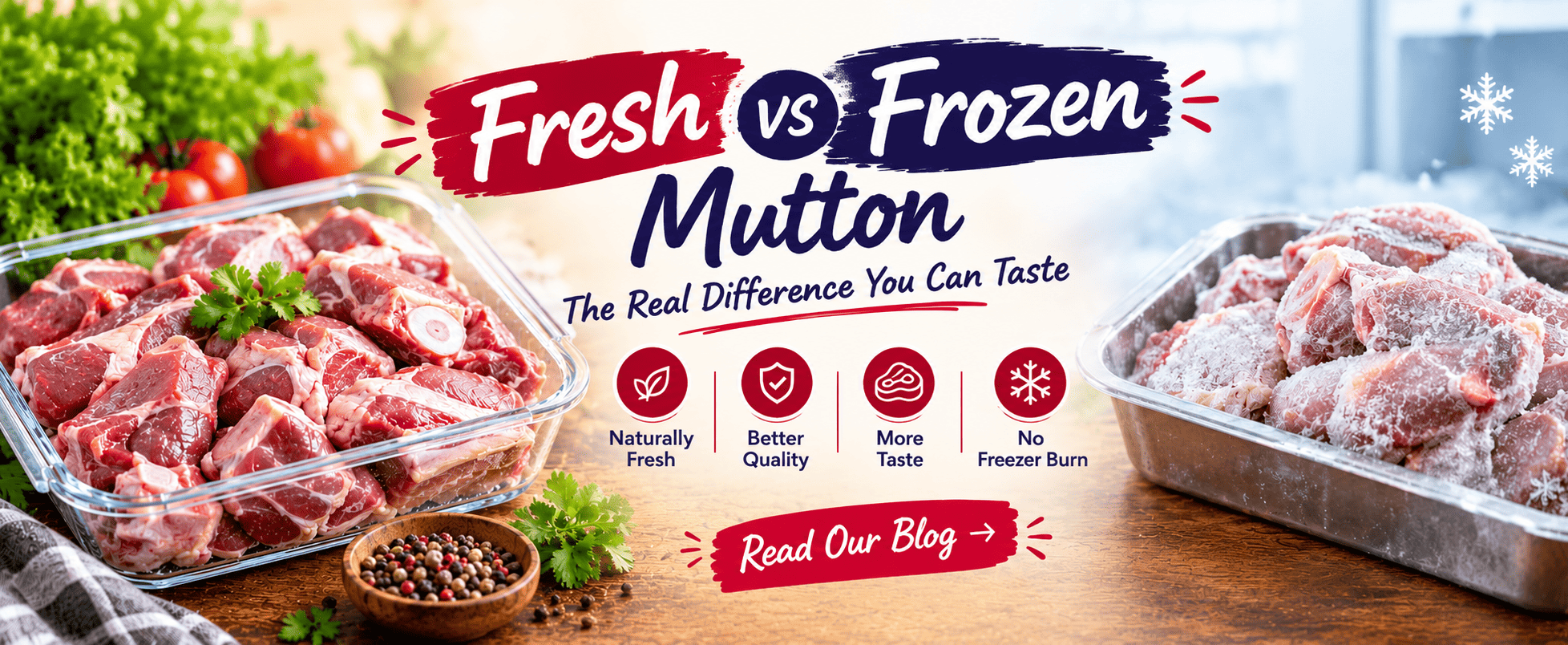
Why This Question Comes Up So Often
Mutton is expensive enough that people want to get it right. Nobody wants to spend on a kilo of goat meat and end up with something chewy, smelly, or bland on a special Sunday. So the fresh-vs-frozen debate isn't really about food safety for most people — it's about not wasting a good meal. Fair concern, and worth answering properly instead of just saying "fresh is always better" and moving on.
What Actually Changes When Meat Is Frozen
Freezing doesn't "damage" mutton the way people assume. What it does is form ice crystals inside the muscle fibres. If it's frozen slowly, those crystals grow large and rupture the fibres — that's what causes the slightly mushier texture and the puddle of liquid you sometimes see after thawing. If it's frozen quickly and at a proper temperature, the crystals stay small and the meat holds its structure far better. So "frozen mutton is inferior" isn't really true — "badly frozen mutton is inferior" is closer to the mark.
Fresh vs Frozen — A Straight Comparison
Texture
Fresh has the edge, especially for slow-cooked curries where texture really shows. Frozen is close behind if thawed correctly — not miles apart.
Taste
Very little difference once cooked with masala and time. Most people genuinely can't tell in a blind taste test.
Nutrition
Protein, iron and fat content stay essentially the same. Freezing doesn't strip nutrients the way some marketing suggests.
Price & Planning
Frozen wins here — you can buy in bulk when there's a good cut available and use it over weeks without repeat trips.
Where Fresh Genuinely Matters More
For dishes where the meat is the whole point — a simple mutton curry with minimal spice, or something grilled — fresh cuts do show their advantage. The muscle fibres are intact, the fat renders differently, and there's a subtle "cleanness" to the flavour that's hard to fake once meat has been through a freeze-thaw cycle. If you're cooking for a big occasion and want that restaurant-style bite, fresh is worth going out of your way for.
Where Frozen Is the Smarter Choice
For everyday cooking — biryani, keema, slow-braised curries with lots of spice and long cook times — the difference practically disappears. Long cooking breaks down fibres anyway, so whatever texture edge fresh mutton had gets equalised in the pot. If you cook mutton once or twice a month and don't want to plan around fresh availability every single time, a well-frozen stock is genuinely the more practical option.
If You Do Buy Frozen, Thaw It Right
Move It to the Fridge, Not the Counter
Thawing overnight in the fridge keeps the temperature safe throughout. Leaving it out on a Patna afternoon is asking for trouble.
Never Refreeze Once Thawed
Each freeze-thaw cycle breaks down more fibres and drains more moisture. Thaw only what you'll actually cook.
Pat It Dry Before Cooking
Thawed mutton holds extra water. Drying the surface helps it sear properly instead of stewing in its own liquid from the start.
Our Honest Take, Cut-by-Cut
We keep both available for a reason — they solve different problems, not one being a "downgrade" of the other. If you're cooking the same day or the next, we'd point you to fresh cut. If you're stocking up for the week or the recipe involves a long simmer anyway, our properly flash-frozen packs will do the job just as well, at a better price per kilo. The one thing we'd genuinely tell you to avoid is meat that's been sitting frozen for months without a clear packing date — that's where quality actually drops, regardless of which one you started with.
Frequently Asked Questions
No. Freezing preserves protein, iron and fat content almost fully. The main changes from freezing are in texture and moisture, not nutrition.
In slow-cooked, well-spiced dishes like curry or biryani, most people can't tell the difference. In simple, lightly spiced preparations, fresh mutton has a slight edge.
Frozen mutton stays safe for several months, but for the best taste and texture, it's best used within 2–3 months of freezing.
It's best avoided. Refreezing thawed meat increases moisture loss and raises the risk of bacterial growth during the thaw-refreeze cycle.
Fresh Today, Frozen for Later — Your Call
Every cut we pack, fresh or frozen, is handled the same way: clean, cold-chain, and on your table fast.